
 By
By 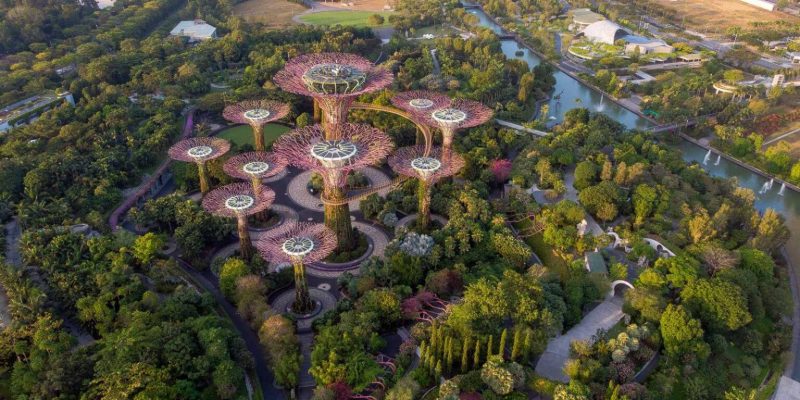
Transforming Concrete into Canopy
The landscape Singapore has cultivated over the past few decades represents one of the most ambitious urban greening projects in human history. In a nation where space is perhaps the most precious commodity, the decision to dedicate substantial territory to parks, gardens, and green corridors might seem counterintuitive. Yet this tiny island nation, measuring just 734 square kilometres, has managed to weave nature so thoroughly into its urban fabric that it has earned the moniker “City in a Garden.” The transformation didn’t happen by accident, it emerged from deliberate policy, considerable investment, and a recognition that human wellbeing and ecological health are inextricably linked.
The Vertical Frontier
When land is scarce, the only direction to grow is upwards. Singapore’s landscape architects have embraced this principle with remarkable creativity, transforming building facades into living walls and rooftops into aerial gardens. Walk through the central business district, and you’ll notice something peculiar: greenery cascading down skyscrapers, trees growing from terraces thirty storeys high, and gardens suspended in the sky.
This vertical approach to landscaping serves multiple purposes:
• Temperature regulation
Green walls can reduce building surface temperatures by up to 10 degrees Celsius, lessening the urban heat island effect
• Air quality improvement
Plants filter pollutants and produce oxygen, creating healthier breathing spaces in dense urban areas
• Biodiversity corridors
Vertical gardens provide habitats for birds, butterflies, and insects, connecting isolated green spaces
• Psychological benefits
Studies consistently show that visual access to nature reduces stress and improves mental health
The Singapore landscape design philosophy recognises that nature needn’t be confined to ground level. In a place where every square metre counts, thinking three-dimensionally has become essential.
Gardens as Infrastructure
Perhaps nowhere is Singapore’s commitment to landscaping more evident than in its signature horticultural attractions. These aren’t mere decorative spaces, they’re carefully engineered ecosystems that serve educational, recreational, and environmental functions simultaneously. The integration of technology with horticulture has created landscapes that are both beautiful and purposeful, where giant tree-like structures collect rainwater and generate solar power whilst supporting vertical gardens.
As landscape architect Professor Tan Puay Yok once observed, “We don’t see greenery as an amenity. We see it as essential infrastructure, as important as roads or utilities.” This perspective has fundamentally shaped how Singapore landscapes its limited territory, treating green spaces not as luxuries to be squeezed in where possible, but as vital systems requiring protection and expansion.
The Native Plant Renaissance
For years, Singapore’s approach to landscaping favoured exotic species, showy flowers and fast-growing trees imported from around the world. The landscape of Singapore became, in some ways, a botanical melting pot, with species from every continent thriving in the tropical climate. Yet something was missing. Native wildlife, evolved to depend on indigenous plants, struggled to find footholds in this curated environment.
Recent years have witnessed a shift towards ecological restoration, with landscape designers increasingly incorporating native species into their plans. This isn’t purely sentimental, native plants require less maintenance, resist local pests more effectively, and support far more diverse insect and bird populations. The rewilding of Singapore’s landscape, even in small pockets, has yielded surprising results: the return of butterflies thought locally extinct, increased sightings of native birds, and more resilient ecosystems capable of withstanding climate pressures.
Climate Considerations
Singapore’s position just 137 kilometres north of the Equator presents unique challenges for landscape management. Intense heat, high humidity, and dramatic rainfall patterns mean that landscaping Singapore requires specialised knowledge and adaptive strategies. Climate change has only intensified these challenges, with increasingly severe weather events testing the resilience of green infrastructure.
The response has been sophisticated: rain gardens that absorb sudden downpours, drought-resistant species for periods of unexpected dryness, and shade trees strategically placed to cool pedestrian corridors. Singapore landscapes must now anticipate conditions that would have seemed extreme just decades ago.
The Human Element
What makes Singapore’s landscaping truly remarkable isn’t the technology or the scale, it’s the democratisation of green space. Parks and gardens aren’t relegated to wealthy neighbourhoods; they’re distributed throughout the island, accessible to all residents regardless of income. This equitable approach recognises that contact with nature isn’t a luxury but a necessity, particularly in one of the world’s most densely populated nations.
The results are visible in how Singaporeans use these spaces: morning tai chi practitioners in neighbourhood parks, families picnicking under heritage trees, office workers eating lunch surrounded by greenery. The landscape has become woven into daily life, not set apart from it.
Looking Forward
The story of how Singapore has landscaped itself offers lessons for cities worldwide grappling with density, climate change, and quality of life. It demonstrates that even in the most space-constrained environments, nature can find a place, if we’re willing to reimagine what urban landscapes can be. As cities grow taller and more crowded, the example of the landscape Singapore has created becomes increasingly relevant, a testament to what’s possible when we refuse to choose between urban development and natural beauty.







Comments