
 By
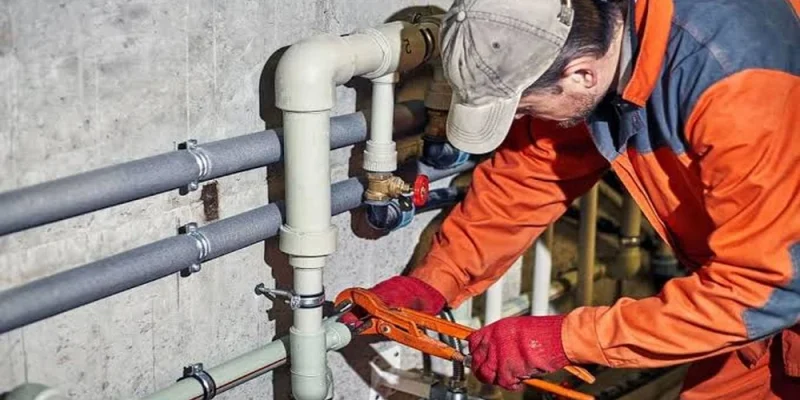
Experienced plumbers often guess what they will find behind a wall before they open it. They are not psychic. They glance at the trim, the windows, the layout of the bathrooms, and they know roughly when the house went up. In a city that has grown in waves for more than a century, that date says a surprising amount about the pipes.
Building materials follow fashion and code. What was cheap and approved in 1955 was not what crews reached for in 1985, and both differ from what goes into a tract home in Alamo Ranch today. Every era left behind its own favorite pipe, and every pipe has its own way of failing.
That is why a good San Antonio plumber often asks when a house was built before asking much else. The family crew at Bailey’s has spent more than 15 years in homes from the city’s older core out to the Hill Country, and much of their work, from leak detection to full sewer line replacement, comes down to material choices made decades ago. Their estimates come free, and financing is on the table for the larger jobs those old choices sometimes force.
Finding the Year Your House Was Born
Most owners know roughly how old their home is, but “roughly” can hide a decade. The county appraisal record is the easiest place to start, with one caveat. The Bexar Central Appraisal District notes that its records were inherited from cities and school districts when it formed, so the year built on homes from before 1982 can be off. A few other clues help confirm the date.
- The manufacture date printed on the water heater label, which at least tells you when that unit went in.
- Stamps on toilet tanks, often under the lid, showing a date of manufacture.
- Exposed pipe where the main line enters, near the water heater or under the kitchen sink.
- Old permits and closing documents, which sometimes mention earlier repiping.
With a decade in hand, the rest of the house becomes easier to read.
Before the Fifties, Iron Everywhere
Homes in neighborhoods like Monte Vista, King William and Tobin Hill were mostly plumbed with galvanized steel supply lines and cast iron drains. Galvanized pipe rusts from the inside out. The zinc coating wears away, rust builds up, and the opening narrows until the far bathroom gets a trickle. Brown water after the house sits unused is a classic sign. Many of these homes were partially repiped long ago, which creates its own trouble when copper is joined straight to steel without a dielectric fitting and the joint corrodes.
The sewer side often ran out to the street in clay tile, with joints every few feet that make an open invitation for tree roots. Live oaks are beautiful shade and relentless root seekers.
Postwar Suburbs and Fiber Pipe
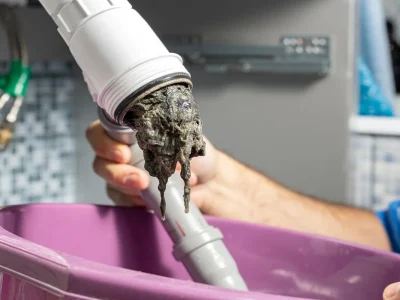
The building boom after the Second World War brought copper supply lines into wider use, a real improvement that holds up well even now. The weak link in many homes from this period is what lies outside. Some builders used Orangeburg pipe, a tar soaked wood fiber tube that was cheap and easy to lay. Over time it softens, flattens and blisters, and sewer camera footage of an Orangeburg line can look more like a crushed straw than a pipe.
Cast iron drains under the slab also remained common through these decades. Cast iron typically lasts several generations, but homes from the fifties and sixties are now old enough that cracks, scale and broken hubs show up regularly.
The Gray Pipe Years
From roughly 1978 to the mid nineties, polybutylene was the darling of builders. It was flexible, inexpensive and fast to install. It also turned out to break down when exposed to the oxidants in treated water, cracking from the inside and failing at fittings without warning. Production stopped in the mid nineties after a large class action settlement, but plenty of houses still carry it.
It is usually gray, sometimes blue or black, and often stamped PB2110. Some insurers hesitate to cover homes that still have it, so it is worth identifying before buying or selling. Homes from this stretch were also among the first to get plastic drain lines in PVC or ABS, which generally hold up well.
Newer Builds Have Problems of Their Own
Homes from the late nineties onward mostly use PEX, a flexible plastic tubing that tolerates freezing better than rigid pipe and comes with fewer joints. That does not make these homes trouble free.
Many newer houses route water lines through the attic, which looked sensible until the February 2021 freeze left thousands of San Antonio homes with burst lines overhead and soaked ceilings below. Builder grade fixtures, undersized water heaters and early low flow toilets from the mid nineties, which often struggled to clear a single flush, are common complaints. Closed systems with a backflow preventer or pressure regulator also need a working expansion tank, and a failed one stresses everything downstream.
The Ground Ages Every House Equally
One factor ignores the build year entirely. Much of Bexar County sits on expansive clay that swells after heavy rain and shrinks hard during drought. Slab foundations ride that movement, and rigid pipes buried beneath them do not bend gracefully. Slab leaks, the warm spot on a tile floor or a water meter that spins with every tap closed, can hit a ten year old home as easily as a sixty year old one. Long dry spells followed by sudden storms tend to bring a wave of them.
Reading the Whole Timeline
Very few houses keep one era’s plumbing intact. A 1940s bungalow may have copper supply, original cast iron drains and a PVC sewer section someone replaced after a backup. A 1990s house may have had its polybutylene swapped for PEX in all but one bathroom. The build year is a starting hypothesis, not a verdict.
Still, it narrows the list of suspects fast. Knowing what was likely installed lets you ask sharper questions, budget for the big replacement before it becomes an emergency, and recognize the early signs your particular house is most likely to show. A home does not tell you its age out loud, but its pipes have been keeping the record the whole time.




Comments