
 By
By 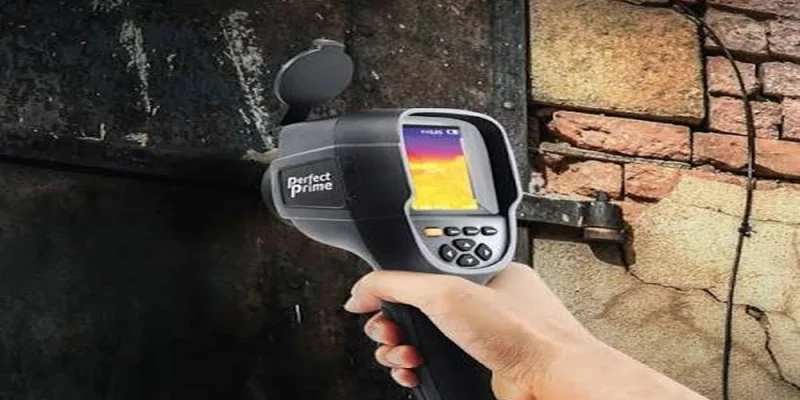
A small feature can be visible in a thermal image without occupying enough of the image for a dependable temperature measurement. Distance, the camera’s resolution and its field of view all matter. Before renting a camera to examine a narrow ceiling edge or another small detail, separate the ability to notice it from the ability to measure it.
That distinction is easy to miss on a bright screen. A coloured patch with a number beside it looks authoritative, especially when the display offers a zoom button. Yet enlarging the presentation does not necessarily provide more information about the original surface. The apparent precision of a number and the quality of the measurement are different things.
The target occupies a finite part of the image
Consider a narrow strip where two surfaces meet. In a wide view of the entire wall, that strip may occupy only a small portion of the thermal image. The camera’s temperature tool must work with the information captured there. A visible line in the picture does not establish that the instrument has isolated it from the surrounding surfaces.
FLIR’s explanation of thermal-camera measurement distance relates the problem to resolution, field of view and the size of the target in the image. Its central distinction is useful for a rental decision: being able to see an object is not the same as being able to measure it accurately.
A broad surface and a tiny feature therefore present different equipment questions, even when both are inside the same room. Do not transfer a camera’s apparent success on the broad wall to a small joint without checking the measurement requirements. The relevant detail is the size of the feature being evaluated, rather than simply the overall size of the property.
The camera’s instructions should explain the conditions for using its measurement functions. This may involve focus, target coverage and model-specific limits. A general online rule is not a substitute for those instructions. Where the finding will influence repairs or a building assessment, a qualified thermographer or other appropriate professional should decide whether the measurement is defensible.
Digital enlargement cannot add a missing measurement
Zoom can make a saved image easier to look at, but it should not be mistaken for a new inspection. Imagine enlarging an ordinary photograph until a small mark fills the screen. The larger display may help you discuss where the mark sits; it does not recreate detail that the original image failed to capture.
FLIR makes the same point about digital zoom in thermal imaging: enlarging pixels does not improve the ability to measure a small target. That limitation matters when a user places a measurement cursor on a tiny feature after magnifying it. A more comfortable view can still be based on the same inadequate measurement information.
Preserve this distinction when sharing images. A cropped picture may be useful for locating the area of interest, but retain the original view and identify the crop as an enlargement. Do not present the enlarged image as if it came from a closer or more detailed measurement. Someone reviewing it needs to understand what was actually captured.
Nor should software sharpening or a crisp visible-light overlay settle the question. Read the supplied camera’s documentation to distinguish its thermal data from display enhancements. The fact that a screen shows a sharp outline does not, by itself, tell you how many thermal measurements describe the feature within that outline.
Describe the feature before comparing cameras
For a Richmond Hill property enquiry, explain what you want to examine and where you can observe it from. A small ceiling junction viewed from the floor raises a different question from a broad wall patch at a comfortable viewing position. Approximate dimensions and the intended observation distance are more informative than requesting the most powerful camera available.
Also say what decision the result is intended to support. Is the aim to locate an area for further professional assessment, compare broad surface patterns or obtain a temperature measurement of a particular component? A tool can be useful for one purpose while being insufficient for another. Defining the intended use helps prevent an attractive image from being assigned more authority than it deserves.
When reviewing infrared camera hire in Richmond Hill, ask for the model’s relevant imaging and measurement information. Confirm what instruction is available for the proposed task. The presence of a rental category does not establish that every available model can resolve every feature or that the hire includes interpretation of a building defect.
Do not solve a distance problem by taking an unsafe position. A need for more detail is not permission to climb on furniture, approach electrical equipment or enter a damaged area. Tell the assessor about the practical observation limit. It may change the equipment choice or make a professional inspection the appropriate route.
A useful inspection may need another method
Even an adequately resolved surface-temperature pattern does not identify every possible cause. Building materials, surrounding conditions and the inspection purpose still need interpretation. For moisture concerns in particular, a thermal pattern should be considered alongside appropriate assessment rather than treated as a direct measurement of water hidden in the assembly.
If the target is too small or inaccessible for the proposed setup, record that limit plainly. An honest result can be that the camera did not provide sufficient information to answer the question. This is more useful than attaching a temperature value to a feature that the instrument could not distinguish reliably.
Let the unresolved question determine the next inspection step. It may call for a different camera arrangement, another measurement method or specialist advice. The important gain is knowing why the original view was insufficient. A screen can display a number very neatly; the decision to rely on it still depends on what the camera actually measured.




Comments