
 By
By 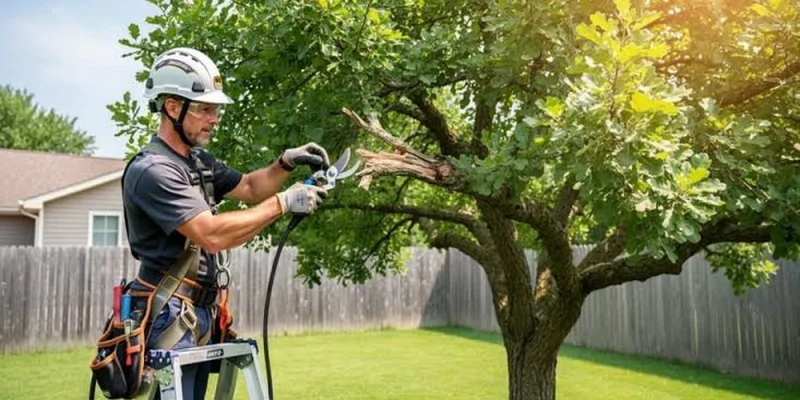
Overhanging branches rarely announce themselves as a hazard until a storm brings one down onto a path, a car, or a fence below, at which point the timing of any prior pruning becomes painfully obvious. Scheduling tree pruning around foreseeable risk, rather than waiting for visible damage to force the issue, is what separates a proactive outdoor space from a reactive one. Reviewing tree pruning makes clear why timing this work properly matters as much as doing it at all.
Pruning Ahead of the Monsoon Season
Scheduling a pruning pass before the wetter months arrive removes weak or overextended branches before wind and rain have the chance to bring them down unexpectedly onto whatever sits below them. Waiting until storm season has already begun means any necessary work competes with emergency callouts, making it considerably harder to get a slot booked in time, often at a considerably higher rate than a routine booking would have cost.
Clearing Sightlines Near Driveways and Paths
Low branches encroaching on a driveway, footpath, or road-facing boundary create a visibility hazard for drivers and pedestrians alike, one that grows worse gradually enough that residents often stop noticing it entirely. Scheduling pruning specifically to restore clear sightlines is a safety measure as much as a cosmetic one, particularly around blind corners or shared access routes where a moment’s obstructed view can genuinely matter.
Managing Growth Near Power Lines
Branches growing toward overhead power lines pose a genuine electrical hazard, and pruning in this specific zone requires particular caution around clearance distances and, in many cases, coordination with the utility provider beforehand. This is one situation where scheduling pruning proactively, well before branches actually reach the lines, avoids a far more complicated and urgent situation later, one that may involve a service interruption affecting far more than a single property.
Assessing Risk Before Committing to a Date
Before locking in a pruning date, a proper walk-around assessment of every significant tree on the property helps identify which ones carry the most pressing risk and should therefore be scheduled first rather than last. Ranking trees by genuine risk, rather than simply working through them in whatever order is most convenient, makes far better use of a limited maintenance budget each year, and ensures the highest-risk specimens never end up waiting the longest for attention.
Timing Around Flowering and Fruiting Cycles
Pruning at the wrong point in a flowering or fruiting cycle can remove next season’s blooms or produce entirely, even though the cuts themselves may look perfectly reasonable at the time they are made. Coordinating pruning schedules with each species’ particular cycle, rather than applying one blanket calendar to every tree, avoids this easily overlooked mistake. Comparing this against a tree cutting shows how much specific, species-level timing knowledge actually matters in outdoor maintenance.
Scheduling Around Property Events
Commercial properties hosting outdoor events, and homeowners planning a gathering, both benefit from scheduling pruning work well ahead of the date rather than in the final days beforehand, when debris removal and cleanup can conflict with preparations already underway. Booking early also leaves room to address anything unexpected the crew happens to find once the work has actually started.
Recognising Signs That Pruning Cannot Wait
A branch with a visible crack, one hanging at an unusual angle, or one clearly dead while the rest of the tree remains healthy are all signs that pruning should happen immediately rather than at the next scheduled visit. Treating these signs as urgent, rather than deferring them to a routine appointment, is what actually prevents an entirely avoidable incident from occurring in the days or weeks that immediately follow the first sighting.
Coordinating With Neighbours and Shared Boundaries
Trees overhanging a shared boundary or a neighbouring property often require a degree of coordination before work begins, both as a courtesy and because access for equipment may need to cross onto adjoining land during the job itself. Scheduling this conversation well ahead of the actual work date avoids delays once a crew has already arrived on site, and helps keep an otherwise routine job from turning into an entirely avoidable neighbourly dispute.
Building a Seasonal Pruning Calendar
A seasonal calendar mapping out pruning windows for each significant tree on a property turns what would otherwise be reactive, ad hoc scheduling into a predictable annual routine that is considerably easier to plan around and budget for properly, particularly for larger properties managing several mature trees at once. Pairing this calendar with broader tree maintenance keeps the entire property in consistently better condition year-round.
Making Timing Part of the Safety Plan
Pruning scheduled around genuine risk factors, rather than convenience or habit alone, does considerably more to keep an outdoor space safe than the same work carried out at an arbitrary point in the calendar. Treating timing as a deliberate safety decision, not an afterthought, is what turns routine maintenance into meaningful, lasting risk reduction across the whole property.









Comments