
 By
Most people treat the water bill as a payment reminder. They look at the total, pay it and toss the paper. The more useful number sits a little higher on the page. The usage line shows how much water actually moved through your meter during the billing cycle. Read it the right way and it becomes one of the most honest reports you will ever get about the pipes behind your walls and under your yard.
When the numbers stop making sense and you want someone to trace them back to the source, ACR Plumbers is one licensed and insured option worth knowing about. The company has been in the trade since 2010 and handles leak detection, slab leaks and water line repair alongside more routine jobs. Calls placed before 1:30 PM can usually be booked for the same day.
The Line on the Bill That Deserves a Second Look
Utilities measure water in one of two units. Some bill in gallons. Many others bill in CCF, which stands for one hundred cubic feet and works out to about 748 gallons. A jump from 6 CCF to 9 CCF looks small on paper, but it means more than 2,200 extra gallons went somewhere.
Comparing this month with last month can fool you, because summer lawn watering and holiday guests push usage up for good reasons. A better test is to set this month against the same month last year. Billing periods also vary from about 28 to 33 days, so dividing total usage by the number of days gives a fairer comparison.
The EPA’s WaterSense program offers a handy benchmark. A family of four using more than 12,000 gallons a month in winter, when outdoor watering is usually off, very likely has a leak somewhere. Keep in mind that many cities calculate sewer charges from water usage too. A leak can quietly inflate two lines on the same bill.
Ten Minutes Standing Over the Meter
The bill raises the suspicion. The meter confirms it. The City of San Diego publishes a simple guide to checking for leaks on your property, and the basic method works almost anywhere.
- Turn off every faucet, shower and appliance that uses water, including the dishwasher, washing machine, ice maker and sprinkler timer.
- Find your meter, which is usually in a ground box near the curb or sometimes in a basement or garage.
- Look for the small leak indicator. It is often a red or blue triangle or a little star shaped dial that spins with even the slightest flow.
- Note the full reading and wait at least 30 minutes without using any water.
- Check again. Movement on the indicator or a changed reading means water is escaping.
For very slow leaks, take a reading at bedtime and another first thing in the morning before anyone runs a tap. Then close the main shutoff valve inside the house and look at the meter once more. If it keeps moving with the house shut off, the leak is probably in the service line between the meter and your home.
Toilets Waste More Than Their Share
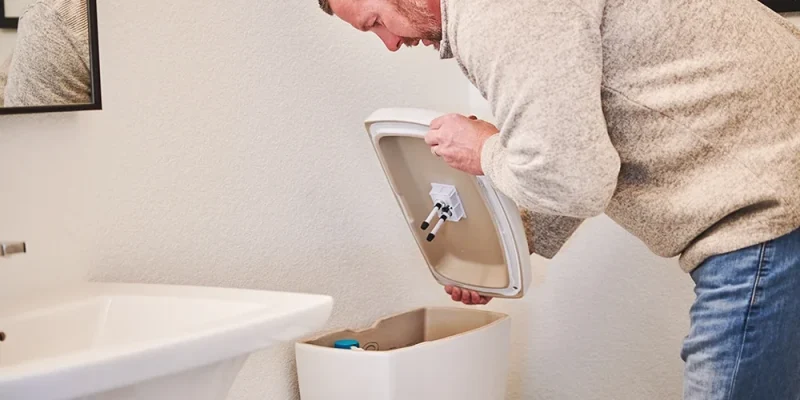
Toilets are behind a large share of household leaks, and they rarely make a scene about it. A worn rubber flapper lets water seep from the tank into the bowl. The fill valve then tops the tank up again, over and over, all day long. A badly leaking toilet can lose 200 gallons a day without leaving a single drop on the floor.
Testing is easy. Put a few drops of food coloring in the tank, skip flushing for about 15 minutes, then look in the bowl. Any color means the flapper is leaking. Also check whether water is spilling into the overflow tube. If so, the fill valve is set too high or failing. A toilet that refills on its own in the middle of the night is giving you the same message.
Following the Trail Outside
Outdoor leaks are easy to miss because soil soaks them up. Sprinkler systems are frequent offenders. A cracked head, a split lateral line or a zone valve that never fully closes can run water for hours. Walk the yard after the system cycles and look for geysers, puddles or patches of grass that stay greener than everything around them.
Hose bibs deserve a look too, especially in climates where they can freeze. A split pipe behind a frost-free spigot often leaks only while the hose is on, so the water ends up inside the wall instead of on the patio. Pool auto-fill valves can stick open as well.
Then there is the service line itself. A soggy strip of lawn between the street and the house, a sunken spot along that path, or a meter box that is always full of water all point to the pipe that feeds your home.
Water That Leaves No Puddle Behind
The trickiest leaks sit inside walls or under concrete slabs. A slab leak tends to show itself through small clues rather than obvious water. You might notice a warm patch on a tile floor when a hot water line is involved, or hear running water when nothing is on. Other signs include new cracks in flooring, damp or musty carpet padding, and baseboards that swell or peel.
Inside walls, look for faint stains, bubbling paint and a musty smell around bathrooms and kitchens. Don’t overlook the water heater. A temperature and pressure relief valve that drips steadily into its drain line can waste a surprising amount, and it often means the system pressure is too high. Most plumbing codes treat 80 psi as the upper limit for a home. Pressure above that strains every joint and supply hose in the house. A water softener stuck in its regeneration cycle can also send water down the drain for hours.
How the Search Narrows Down
A trained technician usually starts by dividing the house into sections. Closing individual valves and watching the meter shows whether the loss is on the hot side or the cold side, inside or outside. From there, acoustic listening equipment picks up the hiss of pressurized water through concrete and soil. Thermal cameras show temperature differences where hot water is escaping, and isolated pressure tests confirm which branch of piping is failing.
Repairs depend on what turns up. A single pinhole can often be fixed by opening a small section of slab or wall. When older copper or galvanized pipe shows leaks in several spots, rerouting the line through the attic or walls, or repiping the house entirely, can cost less over time than chasing one leak after another.
Getting Something Back After the Fix
Many water utilities offer a leak adjustment, a partial credit for water lost before the problem was found. They usually ask for proof such as a plumber’s invoice or receipts for parts, and the request often has to be made within a set number of days after the repair. It is worth calling to ask, because few people know these programs exist.
Homeowners insurance follows its own rules. Policies tend to cover sudden water damage and exclude slow, long-term seepage, which is one more reason to act as soon as the meter shows something odd. Keep photos of the damage, old bills that show when usage started climbing, and every repair record together. If you build the habit of reading your bill the way you would read a bank statement, a small leak gets caught before it ever turns into an insurance claim.
Comments