
 By
By 
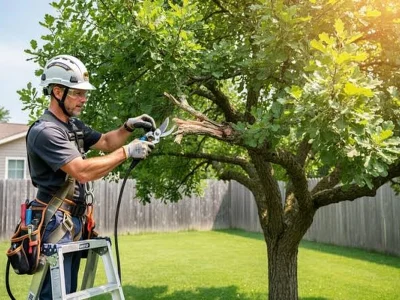
A mature tree near a proposed pool should be part of the site assessment before the pool footprint becomes a favourite design. The visible trunk is only one part of the planning question. Its relationship with excavation, construction activity and the finished landscape needs professional review, rather than an assumption that the tree can simply stay or be removed later.
That does not mean a tree makes a pool impossible. It means the alternatives should be developed with the actual property in mind. A design that acknowledges an important constraint early is more useful than an attractive layout that depends on an untested decision about a living feature of the yard.
Show the tree as more than a dot
Begin with clear photographs showing the tree in relation to the house, boundaries and proposed pool area. Take them from safe, ordinary positions on the property. You are recording the setting, not carrying out an arborist’s inspection. Do not dig around roots, remove branches or disturb the area to make the information look more complete.
Explain what the tree currently contributes to the yard. It may provide a view from the kitchen, a sense of enclosure or shade over a place where people sit. Those observations do not settle technical questions, but they tell the designer why the tree matters to you. Otherwise, a line on a plan can conceal a feature you would miss every day.
Be clear about what you know and what you are assuming. If you are uncertain whether a tree is entirely on your property or whether previous work affected it, say so. A casual measurement or a neighbour’s recollection should not be treated as a confirmed boundary or condition report. Ask which information the design team needs professionally established.
Include nearby trees even if they are not in the middle of the proposed pool. The point is not to decide which ones are technically relevant yourself. It is to give the people assessing the site enough context to identify the questions that require attention.
Let professional assessment constrain the alternatives
In Mississauga, the City’s tree-permit guidance should be checked before work that could injure or remove a tree. Ask the project professionals to explain the requirements applying to the actual site. Do not use a generic pool sketch to decide that no tree-related approval or assessment is needed.
A planning discussion with Jameson Pool & Spa’s design team can bring the pool layout and the tree questions into the same conversation. Its design information specifically includes trees and roots among the site considerations. Confirm how any necessary specialist assessment would be coordinated for your project, rather than assuming that every technical role is included in a general design fee.
Ask to understand the alternatives once the constraints are clearer. Moving the pool, changing a surrounding feature or revising the overall arrangement may have different consequences. Compare those consequences on the same basis instead of treating the original favourite layout as the only acceptable outcome.
Do not ask a designer to promise that a tree will remain unaffected merely because the finished pool edge appears far from the trunk in a rendering. The assessment needs to concern the real site and proposed work. Where uncertainty remains, it should be visible in the decision rather than hidden behind a reassuring picture.
Keep construction movement in the tree discussion
The final pool footprint is not the whole construction site. Materials need somewhere to arrive, workers need access and equipment needs an agreed route. Ask the project team to show how those activities will be managed in relation to any tree-protection requirements. A protected area should not become an informal storage place because the rest of the yard is busy.
Discuss who is responsible for communicating site restrictions to everyone involved. The pool contractor, landscape team and delivery personnel should not be working from separate assumptions. You do not need to supervise specialist work yourself, but you should understand who controls changes to the site arrangement.
If a proposed access route changes, ask whether the tree assessment or protection arrangements need to be revisited. A decision that seems logistical can affect the assumptions behind the approved plan. Avoid authorising an improvised shortcut simply because it appears to save a delivery or prevent a delay.
Keep the current site plan accessible through the project’s agreed communication method. An old drawing on a phone can be mistaken for the version everyone is using. When a change is confirmed, make sure the people responsible for the work know which plan supersedes the earlier one.
Choose the yard you are prepared to look after
The finished relationship between tree and pool also involves ordinary ownership. Discuss anticipated leaf cleanup, access for appropriate tree care and the way the surrounding planting will be maintained. These are practical considerations, not reasons to assume that every nearby tree is a problem or that removal is the simplest answer.
Consider the view with and without the tree when comparing viable alternatives. A pool may look spacious on a plan while the loss of a familiar feature changes the whole feeling of the property. Conversely, retaining a tree may call for compromises elsewhere. Seeing those tradeoffs clearly is better than discovering them after the major decisions have been made.
A convincing design does not promise both an unchanged tree and an unrestricted construction site without assessment. It shows how the proposed yard responds to the evidence, approvals and professional advice. Choose the alternative you understand well enough to own, including the living parts that were there before the pool.


Comments