
 By
By 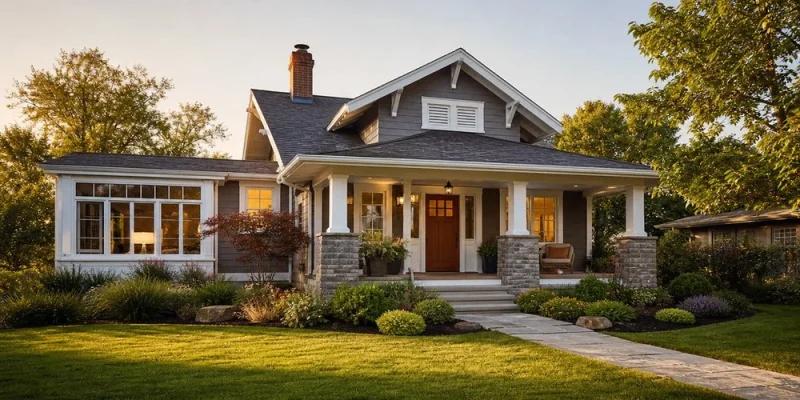
An older home with solid construction and a floor plan that lends itself well to remodeling might be worth saving. But there may be more to its limitations than what’s readily apparent. A house with good proportions and a solid foundation, plus some charm and architectural details, is an excellent remodeling candidate. An existing home with poor proportions and a sketchy foundation is best left standing only if it’s located on a gem of a piece of property.
Assess What the Existing House Can Offer
Ask yourself these questions to determine if remodeling is right for you:
- If you want to make big changes to your home’s layout or expand beyond its footprint, can the bones handle it? Opening up the kitchen or adding a primary suite up top may entail significant structural changes.
- Are there limitations you can live with, including low ceilings, small windows, and a small or poorly located mechanical room? Are the plumbing and mechanical stacks poorly located? Would a stairway relocation be ideal, but is it doable?
- Does the house have some redeeming architectural or historic elements?
- Have there been drainage or other problems with the home? What’s the condition of the foundation?
- How big of a contingency should be built into the budget for unknowns? Older homes especially can be expensive to remodel once walls are opened.
Other things to investigate before committing to remodeling: roof structure; load-bearing walls – if you want the source, it’s www.britannica.com/technology/load-bearing-wall; the age, type, and capacity of the electrical service; the age and type of plumbing; the age, size, and condition of heating and cooling equipment and ductwork; and what it will take to bring the house into compliance with current energy and safety codes.
Compare the Real Cost, Not Just the Starting Number
It can seem simpler to ballpark the cost to build a home on an empty lot using a set of drawings, but remodeling has its own unknowns. Unexpected repairs, code-compliance upgrades, water-damage remediation, outdated electrical, previous modifications that change framing, and other surprises can affect remodeling costs. Building a new home requires tearing down the old one and preparing the site, reconnecting or relocating utilities, redoing landscaping, and, most likely, housing expenses while construction is underway.
To get a sense of what a project may cost, it’s best to create a comprehensive budget for each scenario that includes site prep, design, engineering, permits, construction, finishes, tear-out, housing costs elsewhere, and a healthy contingency. Rather than relying on averages per square foot, consider the unique features of each scenario to compare costs.
Plan Around Construction Logistics
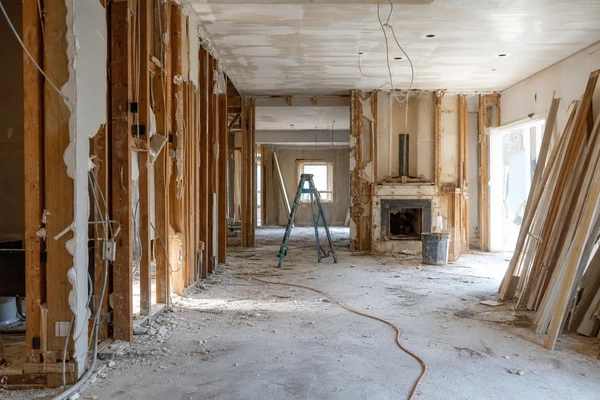
Can you live in the home during the project? Significant changes usually preclude living in a home being remodeled, but minor projects that are divided into phases may allow homeowners to stay. Dust, noise, and the inability to prepare meals or bathe are typical when a home is under renovation. Building a home eliminates these considerations but has its share: tear-down and site prep; foundation, rough-in, and other inspections; construction; landscaping. Lead time for custom items or specialty materials should be considered.
Match the Project to Your Priorities
Remodeling makes sense if you want to stay with the location and basic layout of your home, refresh it, update the systems, improve circulation, and keep some of the character. The practical side of whole home remodeling starts with that distinction. This is also the kind of comparison the team at Simon Joseph Custom Homes considers at the planning stage. Building makes sense if you want to nail down the ideal locations of mechanical systems, storage, window placement, room sizes, ceiling heights, accessibility features, etc., with minimal compromises. If achieving those goals requires significant workarounds, consider whether a new home might be less painful.
Remodeling or building new also depends on the needs of your family now and how that might change. If you think you can accommodate those changes with some tweaks, remodeling is an option. If not, consider starting from scratch.
Run a Side-by-Side Feasibility Check
To decide if remodeling or building makes sense for your situation, work with your builder or designer to explore the following:
- Draw up two scenarios, a new home with no limitations and a realistic renovation. Compare them.
- List the features you want in a home and identify any deal-breakers.
- Look at the survey and other documents to understand setbacks, easements, utilities, etc. Make sure there’s enough room for a new home that doesn’t feel cramped and complies with local setbacks and parking requirements. How will it be oriented to make the best use of sun, breezes, privacy, drainage, etc.? Can the lot handle the type of foundation needed for a new house?
- Get a structural engineer’s evaluation of the house to understand what’s possible. Can rooms be reconfigured or added? Are there areas that are good bones? What elements of the house should be incorporated into the remodel?
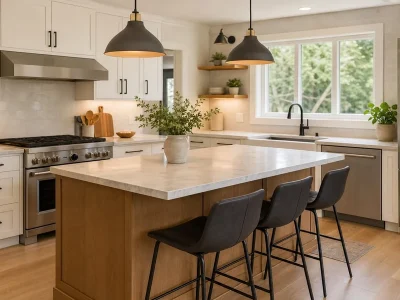
- If the kitchen will be remodeled, review its layout. The main work centers (range, refrigerator, sink) should be easy to get to whether they’re arranged in a triangle or if there’s an island. Allow for 36 inches of space to get by or around each fixture or an island, more if two cooks will be in the kitchen.
There’s no right answer, as remodeling or building new both offer some challenges.

Comments